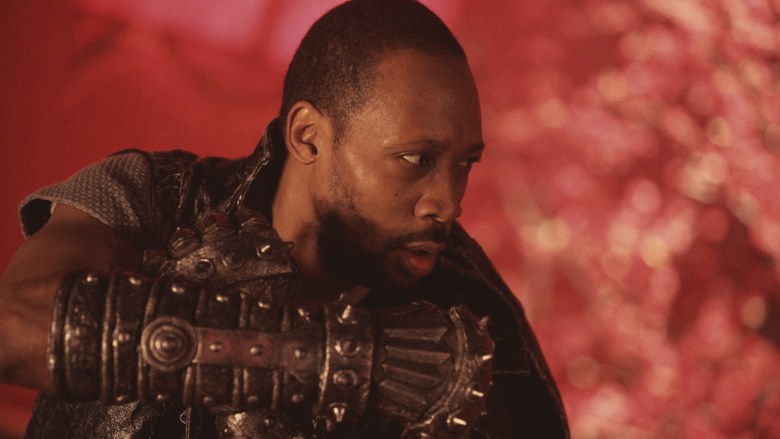
The seed was planted in 2003, when RZA produced the Kill Bill: Volume 1 soundtrack and flew himself to Tarantino's Beijing set on a self-imposed $50,000 budget — thirty days studying how a master blocked scenes and controlled a unit. It was a masterclass he paid for himself.
01The Long Road to Jungle Village
Two years later, RZA met Eli Roth in Iceland and pitched a kung-fu genre film on the flight home. Roth was interested but blunt: a story wasn't enough; RZA needed a complete screenplay. After Roth's Hostel: Part II in 2007, the two committed. They shopped it, landed at Strike Entertainment — which assigned outside writers whose rewrites drifted far from RZA's vision — and then threw that work out.
RZA had imagined every tribe, every fighting style, every costume — the world-building was obsessive from day one.
— Eli Roth, on RZA's original vision
To prove he could direct action, RZA financed and shot a short — Wu-Tang vs. the Golden Phoenix — using Hong Kong-trained kung-fu actors. That short was the calling card. On 7 May 2010, Universal announced it would finance and distribute, with Roth, Marc Abraham and Eric Newman producing. Tarantino lent his name as a "presented by" credit — a stamp of legitimacy that meant everything for a first-time director.
- 2003 — Kill Bill, BeijingRZA scores Vol. 1 and self-funds a month on set, taking notes on Tarantino's method.
- 2005 — IcelandRZA meets Eli Roth and pitches the kung-fu concept on the journey back to LA.
- 2007 — the real commitmentAfter Hostel: Part II, the two sit down seriously; the 90-page story grows toward a 130-page script.
- 7 May 2010 — Universal on boardFinancing and distribution announced; Tarantino attaches his "presents" credit.
- Dec 2010 – Mar 2011 — Shanghai shootPrincipal photography at Hengdian World Studios; Corey Yuen choreographs.
- 23 Oct 2012 — soundtrack dropsThe 15-track album arrives ahead of the film.
02Filming, Editing & the Cuts
Principal photography ran roughly ten weeks. Around week six, RZA pushed the crew hard to recover lost time — until his assistant director reported stunt workers being hospitalised. RZA pulled back, sacrificed shots, and filled gaps with CGI; Roth stepped in to direct additional material.
03The Score & the Album
The score grew from a pragmatic accident: RZA's temp tracks didn't clear in the mix, so — at Tarantino's urging — he scored the whole thing himself, developing the cues with composer Howard Drossin. Jack Knife's theme leans on a jaw harp echoing Ol' Dirty Bastard's "Shimmy Shimmy Ya"; the Blacksmith's scenes draw from Isaac Hayes.
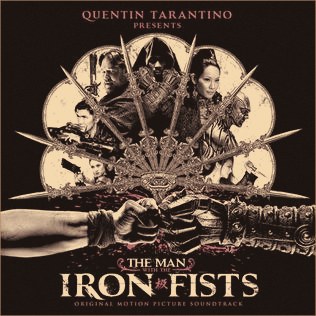
| Artist | Note |
|---|---|
| Kanye West | Featured on the 15-track album |
| Wu-Tang Clan | Master tracks provided by Sony Music |
| Ghostface Killah · Raekwon | Wu-Tang mainstays |
| Talib Kweli · Pusha T | Featured artists |
| RZA & The Black Keys | Cross-genre collaboration |
| Isaac Hayes · William Bell · Mable John | Stax soul cuts licensed for the film |
The people behind it
RZA
Director · co-writer · composer · star
Wu-Tang Clan founder; his directorial debut, playing the Blacksmith.
Eli Roth
Co-writer · producer
Director of Hostel; co-wrote the screenplay and directed additional material.
Howard Drossin
Composer
Developed and finalised the film's original cues with RZA.
Corey Yuen
Action choreographer
Hong Kong veteran who designed the film's fight sequences.
On record as on screen, it's the sound of one man pulling every world he loves into the same room.
Quentin Tarantino, who "presents" the film, urged RZA to produce the entire score himself — a favour repaid from the Kill Bill sessions RZA had helped shape.